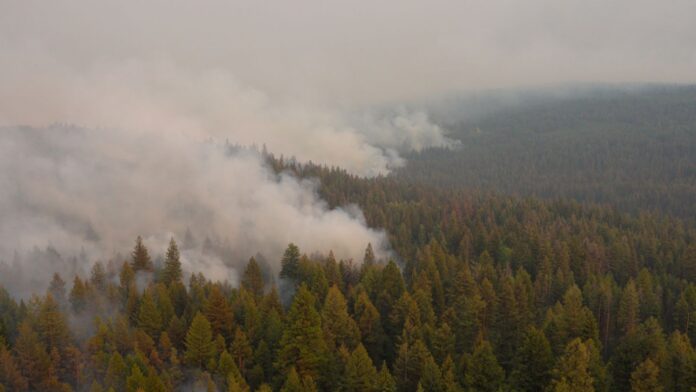

Emergency officials estimate about 150 structures have been damaged or destroyed by the Bald Range wildfire in Summerland and surrounding rural areas.
Regional Emergency Operations Centre Director Graham Statt released the preliminary estimate during a briefing Monday, Aug. 17, hosted by Regional District of Okanagan-Similkameen information officer Erick Thompson.
“What we’re seeing is approximately 150 structures that were damaged or destroyed,” Statt said.
About 40 of the structures are within the District of Summerland. The remaining structures are in RDOS Electoral Area “F,” including Faulder and Meadow Valley.
Officials have not determined how many of the structures are homes or outbuildings. Statt said the total could increase as detailed inspections take place.
“Usually when we get into the detail on-site, we find out there was an additional structure lost,” Statt said. “That number typically can go up. It is a rough number. It’s a live number.”
Statt said most affected property owners in Summerland have been contacted. Notification work is underway in the surrounding rural areas, although officials do not have current contact information for every owner.
Statt said affected residents are being offered counselling and an opportunity to view photographs of their property. Accompanied site visits are also being arranged where conditions allow.
Thompson said officials were withholding images of identifiable private properties until the owners had been notified. He said pool photographs and video showing the broader damage would be made available to media.
Thompson and Statt also addressed repeated questions from evacuees seeking firm dates, times and neighbourhood details for the next phase of re-entry.
Thompson said officials have repeatedly heard from residents who want to know when they can go home. Statt acknowledged those concerns but said the number of agencies and safety requirements involved prevents the EOC from providing details until arrangements are complete.
“We’re hoping to do something much more significant very soon,” Statt said.
Officials said about 400 properties were moved from evacuation order to alert during the first re-entry phase. The second covered about 800 properties.
Statt said the next phase will be larger and will begin earlier in the day than the previous noon re-entry. However, he did not provide a date, property count or list of neighbourhoods.
“It won’t be all of Summerland, but what we certainly will be doing is continuing to roll that up as quickly as possible,” Statt said.
Statt said officials must co-ordinate traffic management and security before opening another area. Thompson said utility crews were replacing damaged power infrastructure, while Statt said fire-weakened trees must be assessed and removed where they could fall onto roads or electrical lines.
Statt said geotechnical assessments of burned hillsides are required before some areas can reopen. He said the loss of trees and vegetation can destabilize slopes, creating the potential for debris flows during heavy rain.
Statt said road access must also be maintained for active wildfire operations. He said helicopters and other firefighting resources were being staged within Summerland as people returned to reopened neighbourhoods.
The District of Summerland has published more information about the considerations used to determine whether an area can reopen. Statt said the considerations do not form a rigid checklist but guide decisions about whether an area has reached a minimum level of safety.
“It’s never going to be the speed we all want,” Statt said. “I want to go home. I’m sure we all do, but we’re moving quickly.”
Statt said individual damaged properties may remain under evacuation order after the surrounding neighbourhood is downgraded to an alert. He said that could create a checkerboard of orders and alerts within the same neighbourhood.
Statt said keeping a property under order allows supports to remain available to the affected household and prevents access to unstable structures, open foundations and other hazards. He said affected properties may be fenced and marked while neighbouring residents return.
Statt said residents generally lose supports tied to an evacuation order when their neighbourhood moves to alert.
The next re-entry phase will be announced through Voyent Alert! once the affected areas and timing have been confirmed.
More information
- Visit the BC Wildfire Service Bald Range incident page for the latest fire size and status.
- Evacuation orders, alerts and regional information are available through the RDOS Emergency Operations Centre.
- Summerland residents can find address lists, maps and return-home guidance on the District of Summerland phased re-entry page.