
A British Columbia business association said there are rising concerns among its members about the impact of B.C.’s reconciliation legislation.
The Business Council of British Columbia said Wednesday that 98 per cent of members surveyed are “very concerned” about the Declaration on the Rights of Indigenous People’s Act (DRIPA) applying to all laws in the province.
It said the same share of respondents also said they do not believe DRIPA is living up to its original promise of creating greater investment certainty in B.C.
“The desire to work with Indigenous communities to create prosperity for all remains strong but the message from business leaders is clear: DRIPA isn’t working,” said BCBC President Laura Jones.
The council said 74 per cent of respondents said they are decreasing investment plans in B.C., while one in three said they are reducing hiring plans in B.C.
More than half of those surveyed wanted to see DRIPA repealed, while close to a third were in favour of amendments to the legislation.
The council said the survey was sent out to 197 individuals, and the results are based on responses from 88 who represent businesses, industry associations and post-secondary institutions.
Jobs and economic growth minister Ravi Kahlon on Wednesday pushed back on the idea that DRIPA is cooling investment in B.C.
“The numbers that we’re actually seeing from Stats Canada, the investments on the ground, the jobs being created, is contrary to [the BCBC’s] internal poll that they put out,” said Kahlon.
“With DRIPA, we outperformed their projections last year for GDP growth. As well, this year we have $8 billion of investment, almost all of that with First Nations,” he said.
But B.C. Conservative Indigenous relations and reconciliation critic Scott McInnis said B.C.’s economic outlook is not bright.
“The government is cherry-picking some of their data here, and it’s effectively not a reality on the ground for British Columbian businesses,” he said.
The B.C. Conservatives have called for DRIPA to be repealed.
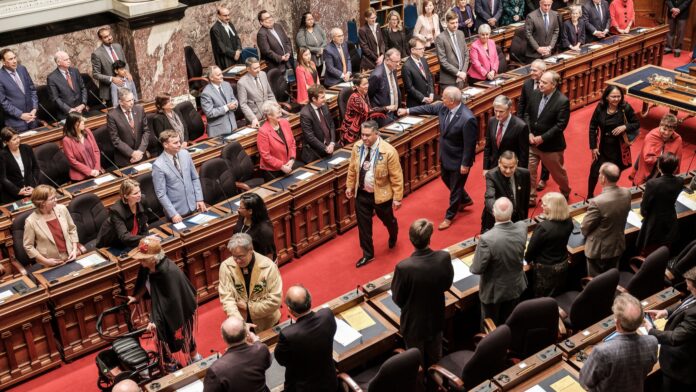
DRIPA was passed unanimously in the House in 2019 and hailed as a major milestone in the province’s reconciliation efforts with First Nations.
It establishes the United Nations Declaration on the Rights of Indigenous Peoples as B.C.’s framework for reconciliation.
The province said at the time that DRIPA was an “additional tool for establishing rules, transparency, and accountability when the Province works with Indigenous governing bodies, business and local government on decisions affecting Indigenous rights.”
Premier David Eby last month backed off plans to introduce legislation to suspend parts of DRIPA during this spring legislative session.
Eby had previously said changes to DRIPA are urgently needed because a December B.C. Court of Appeal decision in favour of the Gitxaała Nation opens the province up to further potential court challenges.
The province has also raised concerns about the impact of a B.C. Supreme Court ruling in August that found the Quw’utsun (Cowichan) First Nation has title to part of Richmond.
Eby said the government and First Nations have committed to working together on the issue, with the hope of finding a solution before the fall session.
First Nations leaders have voiced intense opposition to any changes or suspension of the legislation, as well as the idea of repealing it entirely.