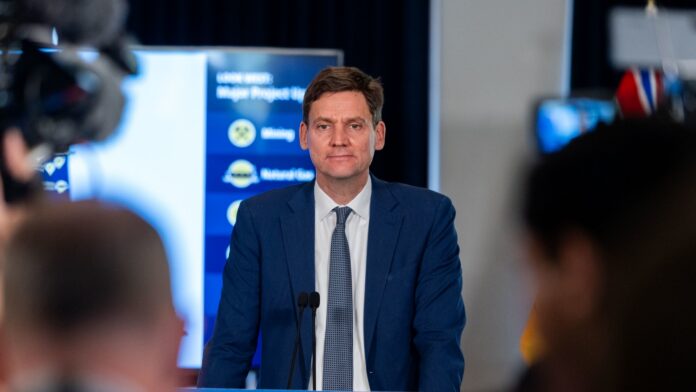

An Angus Reid poll says the B.C. NDP are trailing behind the B.C. Conservatives, while Premier David Eby’s approval rating continues to tumble amid uncertainty about B.C.’s reconciliation legislation.
The report said the Conservatives lead the NDP by 10 points in the question of how British Columbians intend to vote in the next election.
The NDP dropped from 42 per cent in March to 36 per cent last month among decided and leaning voters. Meanwhile, the leaderless Conservatives climbed from 44 to 46 per cent.
Support for the B.C. Greens also climbed four points to 13 per cent.
According Angus Reid, Eby’s approval has fallen from a high of 53 per cent in April 2025 to 33 per cent last month.
The pollster said the downward slide comes amid increased scrutiny of B.C.’s Declaration on the Rights of Indigenous Peoples Act (DRIPA).
Eby has pivoted several times in recent months on making changes to DRIPA.
He has said a recent B.C. Court of Appeal decision in favour of the Gitxaała Nation opens the province up to potential court challenges related to DRIPA.
Eby initially announced in December his government was weighing amendments to DRIPA, then months later said it would table a bill to temporarily suspend some parts of the legislation.
The move still faced intense opposition from First Nations leaders. Some, including Grand Chief Stewart Phillip, said they had lost confidence in Eby as premier.

Despite DRIPA passing unanimously in the House in 2019, the B.C. Conservatives have in recent months called for it to be repealed entirely, saying it is creating more uncertainty for the province.
The Angus Reid report said close to half of British Columbians surveyed support repealing DRIPA, including 26 per cent of those who voted for the NDP in the last provincial election.
While more than half of respondents said there is still more work to be done on reconciliation, two-in-five said enough work has been done on reconciliation and no more is needed.
The report said 55 per cent of British Columbians believed that Eby has done a “bad job” balancing Aboriginal title with private property rights in the province.
More than half believe the province’s economy will be “worse off” under DRIPA in the future.
B.C. Jobs and Economic Growth Minister Ravi Kahlon said Tuesday the province is facing “a tough time right now,” citing challenges from U.S. tariffs and the war in Iran.
[Eby] is doing what most leaders do during challenging times, which is trying to navigate them and find solutions,” said Kahlon.
He said repealing DRIPA would put B.C.’s economy at risk, referring to several major projects for which B.C. has sought First Nations’ co-operation.
“Just tearing something up and putting at risk $88 billion of potential investment, thousands of jobs throughout the province, good paying jobs, that’s a risk we don’t want to take lightly,” said Kahlon.
B.C. Conservative interim leader Trevor Halford said he’s not surprised to see his party pull further ahead of the NDP.
“When I took this role on, I wanted to leave the office in a better place than when I found it,” he said. “I think we’ve done great work, and the NDP haven’t and I think that’s reflective in those polls.”
Halford has led the party since John Rustad stepped down in December under pressure from his caucus.
Five candidates remain in the B.C. Conservative leadership race: former B.C. Liberal labour minister Iain Black, political commentator Caroline Elliott, former federal Conservative MP Kerry-Lynne Findlay, Vancouver entrepreneur Yuri Fulmer and Kamloops-Centre MLA Peter Milobar.
The party says a new leader will be announced on May 30.