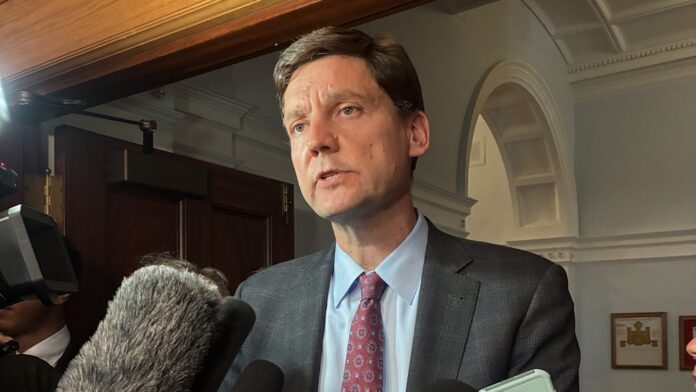

Premier David Eby says he was wrong about the need to make changes to British Columbia’s reconciliation law this spring to protect the province from legal challenges.
The Premier’s Office said Sunday evening the NDP government won’t table legislation related to the Declaration on the Rights of Indigenous Peoples Act (DRIPA) during the current parliamentary session.
Eby said Monday the government and First Nations have committed to working together on the issue, with the hope of finding a solution before the fall session.
It is the latest of several pivots by Eby on the proposed changes to DRIPA in recent months.
“I certainly would have liked to have been right the first time. I was not,” Eby told reporters at the legislature.
He said Attorney General Niki Sharma came to him late last week about a possible alternate path to a solution with First Nations, and they met with the First Nations Leadership Council (FNLC) on Sunday.
“The Government and First Nations Leadership Council are committed to working together with all First Nations leaders on a path forward to discuss and consider the government’s stated legal concerns, while upholding the title and rights and human rights of First Nations,” said a joint statement released Monday by the Premier’s Office and the FNLC.
Several First Nations leaders had sent an open letter to MLAs on Sunday, saying a unilateral suspension of DRIPA would lead to legal challenges and “collective resistance” from First Nations.
“The courts will be asked to determine not only the substance of the suspension but also the process by which it was imposed,” said the FNLC in a statement. “This will result in increased legal uncertainty, significant financial burden to the Province, and further delay to the very economic and regulatory certainty that Premier Eby claims to be protecting.”
The letter said the province had rejected other solutions put forward by First Nations to avoid amendments or suspension of the law.

Eby announced in December his government was weighing amendments to the 2019 legislation. He said a recent B.C. Court of Appeal decision in favour of the Gitxaała Nation opens the province up to potential court challenges related to DRIPA.
The province has also raised concerns about a B.C. Supreme Court ruling in August that found the Quw’utsun (Cowichan) First Nation has title to part of Richmond.
Earlier this month, Eby said the government had heard feedback from First Nations about the proposed amendments. He said the updated proposal would be a temporary suspension of some parts of DRIPA while the province seeks input from the Supreme Court of Canada on the rulings.
Eby initially said the vote on the bill in the House would be a confidence motion, meaning the NDP’s one-seat majority government could topple if the bill fails. He walked that back last week, saying Vancouver-Strathcona MLA and Indigenous leader Joan Phillip had indicated she wouldn’t support the bill.
First Nations leaders expressed anger and frustration over the idea of suspending the landmark legislation. Some, including Grand Chief Stewart Phillip, said they had lost confidence in Eby as premier.
Eby insisted as recently as last week that the legislation needed to be tabled during the spring session. He said Monday he had been ready to table the legislation this week, until his government reached the new agreement with First Nations leaders.

Regional Chief Terry Teegee called the move “good news for all First Nations,” but noted it’s still possible that changes to DRIPA could be introduced in the next legislative session in the fall.
“We’re relieved that cooler heads prevailed and David Eby has come to his senses that we need to work this out, which is one of the things that we’ve always been calling for,” said Teegee.
“But now the real work and the tough work begins,” he said.

The B.C. Conservatives have called for DRIPA to be repealed entirely. Interim Leader Trevor Halford said the government’s most recent change in position raises questions about Eby’s leadership on the issue.
“I have concerns that he is abdicating his responsibility as leader of this province based on pressure,” said Halford.
B.C. Green leader Emily Lowan welcomed the decision to press pause on any DRIPA legislation.
“After months and months of misinformation and fear mongering and ineffective leadership, this is a move towards effective collaboration and something that the B.C. Greens heartily embrace,” Lowan said at the legislature on Monday. “They now have an opportunity to repair this harm and chart a clear course forward.”