
The NDP government is retreating from a plan for a confidence motion on a bill to suspend parts of British Columbia’s landmark reconciliation law.
Government House leader Mike Farnworth said Monday a bill on the Declaration on the Rights of Indigenous Peoples Act (DRIPA) is still expected during the spring session, but it won’t be a matter of confidence.
The NDP has a one-seat majority in the House, so the government could fall if just one caucus member opposed the bill in a confidence vote.
“We are wanting to find a path forward that works, and that means continuing some conversations with Indigenous nations and Indigenous leaders to make sure the bill that is brought to the House is the right bill,” said Farnworth.
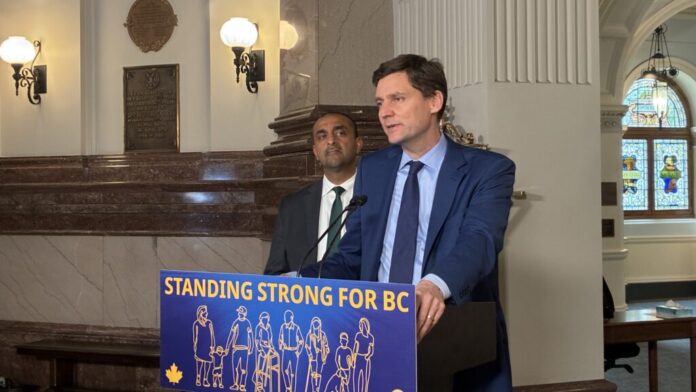
Premier David Eby said last week his government was backing off a plan to table permanent changes to DRIPA, after getting negative feedback from First Nations. He said the updated proposal would instead be to suspend some key sections of the legislation, and he pledged it would be a confidence vote.
Eby walked that back Monday, citing conversations with NDP MLA Joan Phillip, who is an Indigenous leader.
“She expressed to me that she could not bring herself to vote for this legislation,” said Eby. “That obviously changes the math for us, and no one on our team has any interest in sending British Columbians into an election.”
“We also found that the discussion of the confidence vote was preventing members of the opposition and independent candidates from grappling with the substance of the legislation,” he said.
The government’s latest proposal has been met with frustration from many First Nations leaders, who have repeatedly said they oppose any bid to change the 2019 legislation.
Grand Chief Stewart Phillip, who is married to Joan Phillip, said Friday that his wife doesn’t support any “tinkering or meddling with DRIPA,” and called on other MLAs to “vote with their conscience.”
NDP MLA Tamara Davidson, who is a member of the Haida Nation, said Monday she is happy with the government’s work with First Nations, but wouldn’t comment on whether she would support the proposed bill.
“We stepped away from making amendments to DRIPA and suggested a different path based on the feedback that we heard from Indigenous communities, and I stand by it,” said Davidson.
Eby has said his government needs to temporarily suspend some parts of DRIPA for up to three years to protect the province from potential litigation. It follows two 2025 court rulings pertaining to DRIPA and Indigenous title.
An August B.C. Supreme Court ruling declared the Quw’utsun (Cowichan) First Nation has title to part of Richmond. The province has said it could have significant unintended consequences for fee simple private property rights.
Another B.C. Court of Appeal ruling last December in favour of the Gitxaała Nation said the province’s mineral tenure system is not compatible with DRIPA and potentially opens the door to more lawsuits against the province.
The province is seeking appeals of both decisions.
“One hundred per cent of our caucus, which includes me, hates the position this [Court of Appeal] decision has put us in,” said Eby. “We are deeply uncomfortable with the timelines, with the conversations we have to have with Indigenous leaders.”
“It is absolutely important that we do our best to get this right,” he said. “Even now, we are engaging with chiefs to try to find a path forward in a way that they can support.”
Eby insisted it’s urgent to get the changes through before the end of the spring parliamentary session, which only has six active weeks remaining. He said the spring session may be extended to allow time for adequate debate on the bill.
The B.C. Conservatives have called for DRIPA to be repealed outright. Interim leader Trevor Halford said Eby has created more confusion for British Columbians around DRIPA, and that the premier is now doing “damage control.”