
A British Columbia Supreme Court judge has found that provincial rules requiring foreign-trained Canadian doctors to work in rural areas of B.C. are illegal.
Justice Matthew Kirchner said in a Sept. 11 judicial review that B.C.’s health ministry did not have legal authority to force international medical graduates to work in a particular area for up to three years following their residency.
The challenge was brought by the Society for Canadians Studying Medicine Abroad and two Canadians who studied medicine abroad and returned home to B.C.
Under the policy, international medical graduates who secure a residency position in B.C. must sign a “return of service” agreement committing them to work for two or three years in an underserviced area of the province, as directed by the health ministry.
The agreements include financial penalties for breaches. The ruling cited two 2017 cases in which penalties reached more than $480,000 for a family doctor and nearly $900,000 for a psychiatrist.
Justice Kirchner noted that because competition for residency positions is particularly intense for international graduates, they often have no real option but to accept a position with return-of-service obligations.
“The regulatory nature of this obligation is not shielded under the guise of ordinary contractual dealings because the state is purporting to use a contractual power in a coercive way against a segment of society who is given no real choice but to comply,” said Kirchner in the ruling.
He said the return-of-service obligation impacts graduates’ ability to decide where to live free from government interference.
However, Kirchner said because the issue was not raised as a direct constitutional challenge, he was unable to rule on whether the policy violated principles of fundamental justice.
He referred the matter to Health Minister Ravi Kahlon to assess the return of service obligations.
Kirchner acknowledged his ruling could impact physician availability in rural and remote areas of B.C., and allowed 60 days before it takes effect.
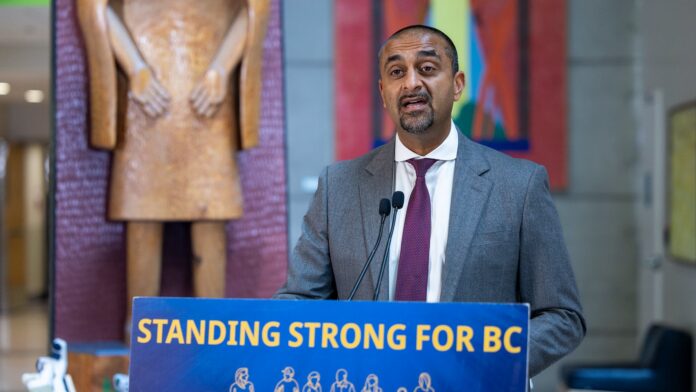
Kahlon said on Tuesday his ministry is reviewing the ruling and considering options to maintain the policy, including possible legislation.
He stressed the province is not considering doing away with the policy.
“This program is critically important for us to be able to continue to attract healthcare workers in rural communities,” said Kahlon.