
Content warning: This story contains references to intimate partner violence and death, including violence affecting Indigenous people.
A new report from the B.C. Coroners Service says at least 135 people died as a result of intimate partner violence in British Columbia between 2016 and 2024, and many of those deaths were preventable.
In one case detailed anonymously in the report, a man with previous charges forced his way into his ex-partner’s home, fatally shooting her and a friend who was in the home. Neither police nor his probation officer knew that he had a firearm, despite a Domestic Violence Risk Factors form acknowledging the belief that firearms were stored in his parents’ home where he also resided.
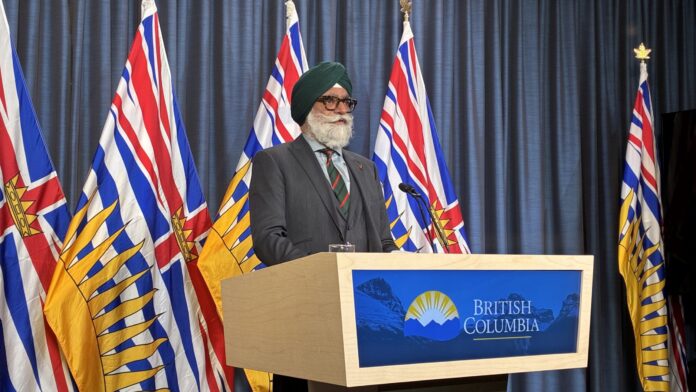
“Across sectors, British Columbians interacted with health care providers, police, community supports and other public systems in the months and years before they died,” said Chief Coroner Jatinder (Taj) Baidwan in the report.
“Too often, the warning signs were present; too often, systems were uncoordinated, overburdened, or unable to respond in ways that meaningfully enhanced safety,” he said.
The report stems from a panel tasked last September with examining the circumstances of IPV-related deaths during that eight-year span.
It found about three quarters of the 115 victims of IPV-related deaths were female, while all but one of the 20 perpetrators who died were male. Nine of those who were killed were under the age of 19.
The report said Indigenous people were overrepresented among the victims. One-quarter of the deaths were Indigenous victims, including 19 female victims.
However, the B.C. Coroners Service said improvements are needed in how data on Indigenous victims are collected..
The Northern Health Authority region had the highest rate of IPV-related killings relative to population, followed by the Interior Health region.
The report also shows a disproportionate number of victims lived in smaller, rural communities. About 29 per cent of those who died lived in a community of less than 10,000 residents. That compares to about 16 per cent of B.C.’s total population that lives in smaller towns.
The report also found that a majority of the victims were killed in their own homes, and over half of perpetrators had a history of assault.
B.C. Coroners Service death review panel chair Ryan Panton said several systemic factors are behind the issue, including barriers to reporting, anti-Indigenous racism and gaps in data collection and analysis.
“These findings reinforce that IPV is a complex multi-system issue requiring co-ordinated, sustained, and culturally safe responses across government, health care, justice, and community sectors,” said Panton.
The panel calls on the province to develop a co-ordinated strategy that includes a standing IPV death review committee, enhanced and consistent training for frontline responders, support for community-led and culturally grounded approaches, and a province-wide public awareness campaign. It calls on the province to implement most of the recommendations within the next year.
Several of the systemic issues and recommendations identified in the report echoed those in the last report, completed 10 years ago.
In 2016, the BCCS also called on the province to increase awareness and education around IPV, strengthen collaborative case management, and improve data collection.
Baidwan acknowledged Monday that there hasn’t been much progress on the issue since the last report was completed in 2016.
“In fact, if you put the clock back to the early 90s when we first started measuring these things, things really haven’t improved,” he said.
He said a key difference in this latest report is the focus on the need for more central co-ordination of the province’s efforts.

Attorney General Niki Sharma said many of the recommendations in the BCCS report overlap with those made in a review last year by Dr. Kim Stanton on the province’s treatment of victims of intimate partner and sexual violence.
“I’m certainly willing to work with the chief coroner to make sure that we can co-ordinate those actions,” said Sharma.
She said the government will release a second update this summer on its progress on the recommendations in the Stanton report.