
Experts say a forecast “super” El Niño could worsen drought conditions in British Columbia, prompting calls for the next provincial government to strengthen water conservation efforts.
Meteorologists have warned this year’s El Niño could be one of the strongest in more than 75 years.
El Niño can happen when ocean water in the Pacific Ocean becomes warmer than usual, affecting weather patterns worldwide.
The climate pattern mostly affects Canada during winter and spring, bringing milder weather to western, northwestern and central Canada.
The United Nations’ World Meteorological Organization (WMO) said in its global seasonal climate update on Thursday that sea-surface temperatures in the central and eastern tropical Pacific are forecast to reach record levels in the coming months, peaking in December.
“El Niño is firmly established and strengthening rapidly. WMO forecasts indicate a near-100 per cent likelihood that it will persist through February 2027, potentially being one of the strongest since at least 1950,” said WMO Secretary-General Celeste Saulo.
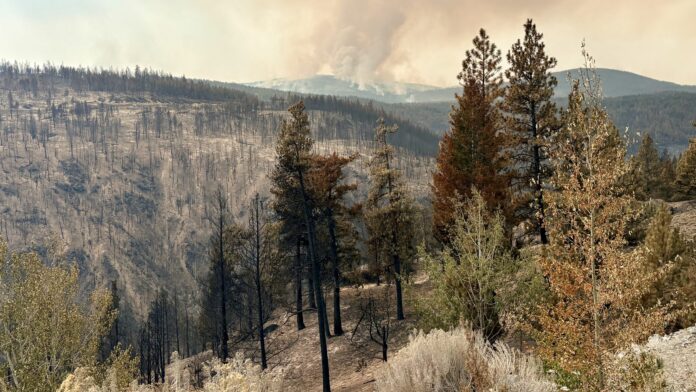
The forecast comes as B.C. is experiencing prolonged drought conditions.
Data from the River Forecast Centre show B.C. has seen high-level drought every year since 2015, including recent years of more widespread severe drought from 2022 to 2024.
B.C.’s latest Drought and Water Scarcity Bulletin said this week that recent precipitation has improved conditions across the province.
However, it said streamflow in the Okanagan remained “concerningly low,” and communities on southeast Vancouver Island and the Thompson-Okanagan region continue to face concerns about drinking water availability.
Coree Tull, chair of the B.C. Watershed Coalition, said El Niño is expected to bring a milder winter with more rain, meaning there will be less snowpack in the mountains and a reduced spring melt.
“When we hear meteorologists talking about a super El Niño, this then could really compound existing drought conditions that are already existing in B.C.,” said Tull.
“Many of our watersheds are carrying this long-term water deficit from past years into 2027, and this is where it could become really concerning if we just don’t have that same snowpack again this year,” she said.
She said some of the potential impacts next summer could include more water restrictions, higher costs for B.C. communities and farmers, critically low stream flows for fish and other wildlife, and increased wildfire fuels.
Tull said recent polling by her organization found that 71 per cent of British Columbians were concerned about the potential for a major water crisis in their community, up from 57 per cent in 2018.
The B.C. Watershed Coalition and other advocates have long called on the province to increase industrial water rates that big industries like mining and LNG pay. They say the increased revenue could be used to fund watershed protection projects.
B.C.’s rates are among the lowest in Canada and haven’t been reviewed in about 10 years.
Former Water, Land and Resource Stewardship Minister Randene Neill said in August her ministry was working to review water rates, with the goal of directing any additional revenue to the Watershed Security Fund.
However, Neill said she could not provide a timeline for completing the review, saying only that she hoped it would be finished before her mandate was to end in two years.
The future of that review is now uncertain, after Premier David Eby dissolved the legislature and called a snap election for Oct. 24.
B.C. Conservative interim leader Lorne Doerkson said Friday that finding ways to store more water on the landscape is an important issue to him.
“We have to commit to this because this is a very serious issue for so much of the province,” said Doerkson.
“With respect to rates, obviously I would have to garner a little bit more information on that, and certainly would want to hear from stakeholders and others who are involved in that,” he said.