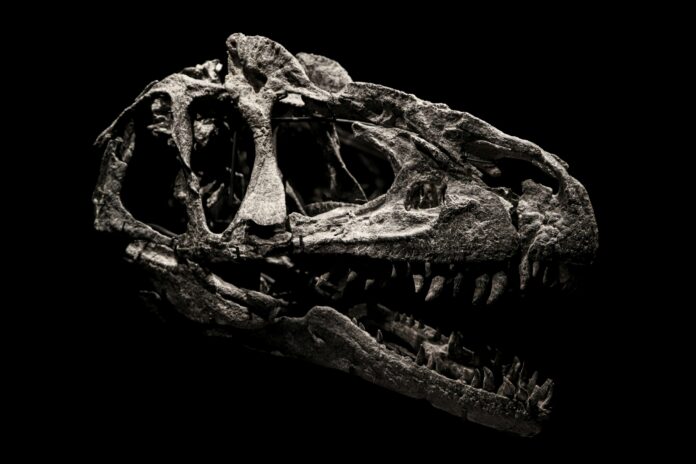

A fossil discovered along a riverbank near a Tumbler Ridge campsite is helping scientists learn more about one of the prehistoric era’s most recognizable predators.
The fossil, an impression of a juvenile jawbone, was first found in 2017 by visitor Rick Lambert while exploring the area. After noticing an unusual shape in the rock, Lambert contacted the Tumbler Ridge Museum, where researchers began examining the discovery.
The fossil was eventually identified as belonging to a juvenile Gorgosaurus, an early relative of Tyrannosaurus rex that lived during the Late Cretaceous period about 75 million years ago.
The discovery was significant for the Tumbler Ridge Museum because dinosaur bones are rarely found in the area.
Eamon Drysdale, curator and collections manager at the Tumbler Ridge Museum, said the region is better known for its fossilized dinosaur tracks, making the find even more notable.
“It was something unusual, and the fact that it was a tyrannosaur was even more unusual,” said Drysdale.
“Relative to the rest of the dinosaurs, the number of fossil specimens for tyrannosaurs are relatively rare, so we were excited to get that at the time.”
The discovery also gave researchers a better understanding of where Gorgosaurus lived and how the species developed as it aged.
Juvenile tyrannosaurs can look very different from adults, meaning young specimens can provide important information about how these animals changed throughout their lives.
Drysdale said the fossil also expands the known range of where Gorgosaurus existed millions of years ago.
“It expands the range of Gorgosaurus for where we know they existed at the time,” Drysdale explained.
“We now have records of it expanding from here in B.C. all the way down to northern Montana, so approximately 1,000 kilometres.”
To protect the original fossil, the museum created a silicone mold and sent a plaster cast to researchers at the University of Alberta for further study.
The cast is now displayed in the museum’s gallery, while the original remains preserved in the museum’s research collection.
The discovery adds to Tumbler Ridge’s growing reputation as an important location for paleontological research. The museum’s collection includes more than 500 million years of Earth’s history, and researchers continue to explore new fossil sites, including ongoing work at the nearby Cabin Pools track site.
Drysdale hopes the discovery will encourage more researchers to visit the region and explore what the museum’s collection has to offer.
“Hopefully the fact that we have this specimen here will encourage other paleontologists to come look at our collection and see what we have to offer,” he said.
Visitors can learn more about the fossil, museum exhibits and local paleontology programs through the Tumbler Ridge Museum.