
Lawyers representing survivors of February’s mass shooting in Tumbler Ridge have filed dozens more lawsuits against OpenAI and its CEO, Sam Altman.
Vancouver-based law firm Rice Parsons Leoni & Elliot (RPLE) is already representing several Tumbler Ridge families who have filed lawsuits in Northern California seeking damages from the tech giant and Altman.
RPLE said Wednesday its U.S.-based co-counsel Edelson PC had filed 30 more lawsuits on behalf of students and staff at Tumbler Ridge Secondary School.
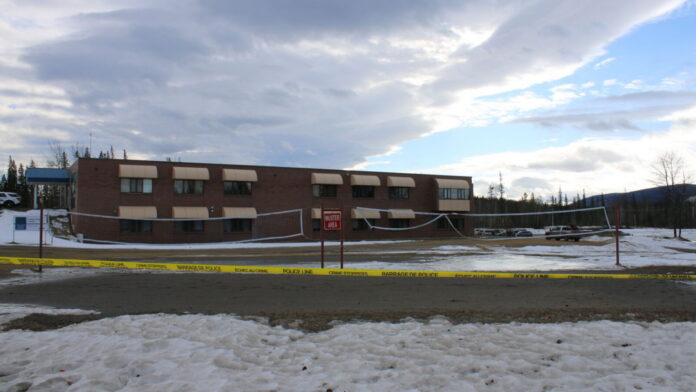
RCMP said eight people, including six children, were killed in the Feb. 10 shooting in the small, northern B.C. community. Two other students were shot and survived. RCMP said the 18-year-old shooter, Jesse Van Rootselaar, also died at the school.
One complainant, teacher Deidre Rushlow, said in a statement she and her colleagues are haunted by memories of that day.
“The career that once brought me such joy now terrifies me in ways I never imagined possible,” said Rushlow.

Altman issued a letter of apology to the community in April, saying he was “deeply sorry” the company did not alert police about Van Rootselaar’s interactions with the company’s ChatGPT chatbot months before the shooting.
Following reports in the Wall Street Journal, OpenAI confirmed it had banned Van Rootselaar’s account in June 2025. It said several employees raised concerns about her messages with ChatGPT, but the company decided not to report the account to law enforcement.
OpenAI said it learned after the shooting that Van Rootselaar had created a second account after the first was banned.
RPLE said the new lawsuits allege that OpenAI’s own safety team identified the shooter as a credible threat of imminent gun violence eight months before the attack, recommended that the company call the RCMP, and was overruled by OpenAI’s leadership.
The lawsuits describe the horrors that students and teachers endured as the shooting took place, and they remained trapped in classrooms and closets for hours.
The lawsuits allege OpenAI decided not to report the shooter’s conversations to police because doing so would undermine the perception of OpenAI as a safe tool and potentially threaten the company’s valuation.
The allegations have not been proven in court.
John Rice, lead Canadian counsel for the complainants, said the lawsuits are seeking major compensatory and punitive damages against OpenAI. He said they are also calling for the release of the shooter’s chat logs and all of OpenAI’s internal documents associated with the decision, and for mandatory law-enforcement reporting requirements for major platforms.
Premier David Eby said on Thursday these lawsuits are the result of a “complete failure” of OpenAI to take accountability for their actions related to the shooting.
“It is inexcusable, it is disgraceful, and it underlines why these companies cannot be trusted. They can’t be trusted to regulate themselves, they can’t be trusted in what they say, and it is up to governments to step in and ensure, whether through lawsuits or regulation, to make sure that out kids are safe,” said Eby.
Attorney General Niki Sharma said in July that B.C. was exploring legal options against OpenAI to recover costs related to the shooting, separate from the lawsuits filed on behalf of families and survivors.
Sharma said Wednesday the province supports the new legal claims filed against OpenAI.
“Although any legal action pursued by the Province would be separate from the litigation initiated by families and community members in Tumbler Ridge, we will work closely with them. These processes can proceed independently and in parallel while seeking accountability through different legal avenues,” said Sharma.
“The commitments made by OpenAI’s leadership, including Sam Altman and Ann O’Leary, have yet to be matched by meaningful action for the people most affected by this tragedy. It is not too late for the company to demonstrate a genuine commitment to survivors, families and the Tumbler Ridge community,” she said.
OpenAI’s chief strategy officer, Jason Kwon, issued a statement responding the new lawsuits, in which he praises the work of OpenAI’s intelligence and investigations teams, responsible for identifying potentials security threats.
Kwon said the lawsuits make false claims about those teams and about who was involved in the decision not to refer Van Rootselaar’s account to law enforcement.
“It’s also completely untrue to say that the people at the center of these challenging decisions do not prioritize safety, or that there are ‘political’ or ‘public relations’ factors at play,” said Kwon. “We’ve been approaching this litigation with respect for both the legal process and the families and victims of this tragedy, and we’ll continue to engage in good faith with that process.”