
Federal Conservatives are criticizing a decision to end a long-running Canadian Armed Forces partnership supporting avalanche control operations at Rogers Pass in British Columbia.
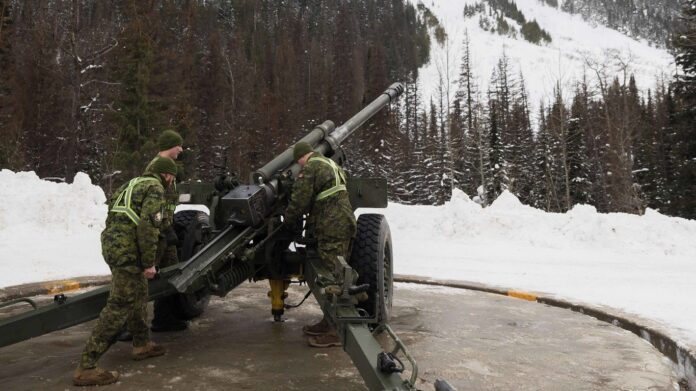
Operation PALACI involves firing 105-mm howitzer field guns along a more than 40-kilometre stretch of highway through Rogers Pass to trigger controlled avalanches and prevent dangerous snow buildup.
The operation has been in place since 1961, but the Department of National Defence informed Parks Canada last November that the Canadian Armed Forces will not renew its agreement to support the program after it expires in August 2027.
Department spokesperson Andrée-Anne Poulin said in an email the decision was made “due to evolving defence modernization priorities and operational imperatives, and the planned divestment of the legacy artillery systems currently used in support of Parks Canada.”
Poulin said Parks Canada and the Canadian Armed Forces have been discussing the future management of avalanche control in the pass.
Rogers Pass is located on federal land in Glacier National Park.
The pass forms part of the Trans-Canada Highway and cuts across the “Big Bend” of the Columbia River between Revelstoke and Donald, B.C.
The federal government said about 4,000 vehicles and 40 trains travel through the pass each day in winter, making it a key corridor for billions of dollars in commercial traffic between B.C. and the rest of Canada.
But it is also the site of frequent avalanches. Parks Canada said the area receives an average of 14 metres of snowfall at treeline and includes 135 avalanche paths that cross the highway.
Parks Canada scientists currently assess snow conditions in Rogers Pass to determine when and where avalanches are most likely. They then provide coordinates to the artillery task force. Highway and rail traffic are periodically halted while gun crews fire explosive shells to trigger avalanches and clear snow from the route.
Federal Conservatives said Tuesday the Liberal government has not outlined a strategy for maintaining safety through the pass.
“The economic importance of this corridor cannot be understated,” said a joint statement from Dane Lloyd, the Conservative critic for emergency preparedness and community resilience, and Mel Arnold, associate critic for fisheries.
They said each hour the pass is closed would cost the Canadian economy an estimated $3 million.
“The annual deployment of the CAF under OP PALACI to Rogers Pass provides protection to a critical transportation gateway at a low cost to taxpayers,” they said.
Eleanor Olszewski, the federal minister responsible for emergency management, said in a social media post the government will not put the trade corridor or the people who rely on it at risk.
“Our government is actively engaged in planning for the future of avalanche control operations in Glacier National Park, including Rogers Pass, and we are committed to ensuring the avalanche control program remains safe, effective, and efficient both during this transition and in the long term,” she said.