
Forecasters say parts of British Columbia face an increased risk of flooding this spring due to a higher snowpack, while some southern and coastal areas should prepare for possible drought conditions this summer.
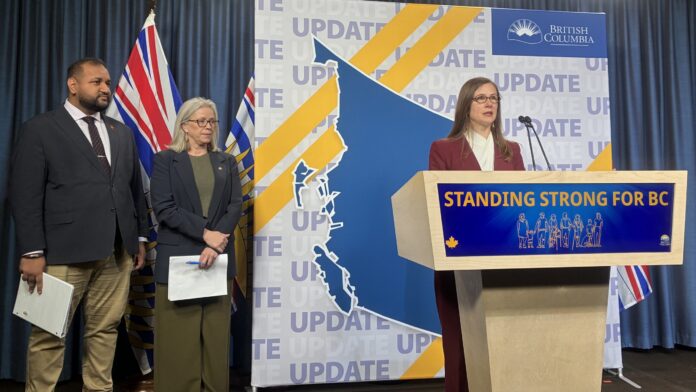
Provincial officials delivered a wildfire and drought update on Thursday.
David Campbell, head of the B.C. River Forecast Centre, said the overall snowpack was at 92 per cent of normal at the beginning of April, which is significantly higher than in the previous two years.
He said there’s an increased flood hazard in the Kootenay, Columbia, Upper Fraser, Thompson, Central Coast and North Interior regions.
The peak time of flooding in B.C. is typically in May and June.
The province said low-lying communities should prepare for potential floods by clearing drains and gutters, moving equipment to higher ground, and staying alert for sudden changes in water levels.
Meanwhile, recent heavy rains across Vancouver Island, the south coast and the southern Interior washed away much of the snowpack, meaning those areas could be more vulnerable to water shortages and drought.
Forecasters are expecting an active spring wildfire season, with warmer-than-normal temperatures across much of B.C. through July.
Matt MacDonald, lead forecaster with the B.C. Wildfire Service, said southern B.C. was fortunate to get a very wet and mild winter. That meant the ground was able to soak up more moisture over the winter, helping alleviate some drought conditions.
However, he said many valley bottoms in the B.C. Interior didn’t get snow over the winter, which could increase the wildfire risk in those areas.
MacDonald said it’s still too early to say for certain how severe the wildfire season will be, and it will depend on how much rain B.C. gets throughout May and June.
Drought is expected to persist in the northeast and central regions of B.C., even if the province does get a wetter spring.
There are currently four active wildfires in B.C., all in the central Cariboo region. A 2.1-hectare wildfire north of Quesnel is classified as out of control.
Forests Minister Ravi Parmar urged British Columbians to be cautious about the wildfire and emergency information they see on social media.
Last August, the B.C. Wildfire Service issued a warning about A.I.-generated photos circulating online that seemingly showed recent wildfires were not accurate.
“It’s fair to say artificial intelligence is a growing challenge, as people share fabricated images and videos, as just occurred last year,” said Parmar. “Be observant and always listen to local authorities and the B.C. Wildfire Service.”
Parmar also warned people not to fly drones near active wildfires, saying it can put firefighters’ lives at risk.
As the wildfire season ramps up, the province announced it is providing $2.5 million for evacuee support services in B.C. communities.
The funding from B.C.’s Community Emergency Preparedness Fund would support more than 50 projects in 88 communities across B.C.
It will go toward volunteer recruitment and training, and the purchase of supplies for reception centres, like IT equipment, hygiene kits, and bedding.
“Emergency support services can be a lifeline for people who have to leave their home suddenly during an emergency, and this investment ensures that people can continue to receive the support that they need, quickly and efficiently,” said Emergency Management Minister Kelly Greene.
The funding program is administered by the Union of British Columbia Municipalities on behalf of the province.