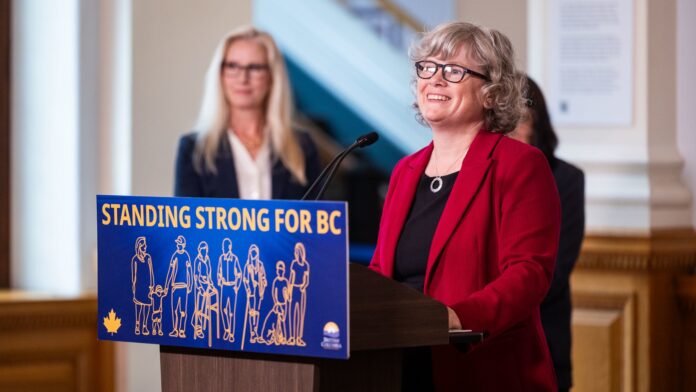

British Columbia midwives will be able to prescribe an abortion pill and other additional medications as the province further expands their scope of practice.
B.C. announced Thursday that midwives will be able to prescribe Mifegymiso, a drug used to treat an early miscarriage or provide a medical abortion within the first trimester.
They will also be able to prescribe Levothyroxine for the management of hypothyroidism and Cabergoline, which is used to stop breast milk production after childbirth.
Midwives would also perform ultrasounds for a broader range of needs, including determining where a fetus is located during early pregnancy.
“These changes will allow midwives to provide more comprehensive care across the full pregnancy journey,” said Health Minister Josie Osborne.
Osborne said midwives play an important role in providing care in rural and remote parts of the province and help reduce pressure on family physicians and other parts of the health-care system.
Osborne did not provide a timeline for when the changes will take effect, but said the province is working closely with the B.C. College of Nurses and Midwives on implementing the new scope of practice.
Previously announced updates that took effect on April 1 allow midwives to provide IUD insertions and other birth control services to people at any time. Previously, midwives could only provide birth control services to people who were within three months postpartum.
Midwives with the appropriate certification can also now use methods similar to those used by physicians to induce labour and use ultrasound to check a baby’s position before birth.
The B.C. College of Nurses and Midwives is currently in contract negotiations with the province.
Osborne said she could not confirm whether any increased compensation is on the table for midwives as the scope of practice expands. She said she would not speak directly about any negotiations underway.
“We will undertake our own internal analysis of what the financial impacts of that might be so that we can accommodate that,” she said.
Jennifer Gagnon is a midwife who previously worked in the U.S. before moving to Canada and eventually settling in B.C. in 2013.
She said she was trained on how to insert IUDs in the U.S., but said compensation under B.C.’s Medical Services Plan needs to be updated.
“I’m not going to do them until I can get paid for them,” said Gagnon. “Our contract negotiation team needs to talk with MSP.”
There are close to 500 midwives working in B.C.
The B.C. College of Nurses and Midwives said there are typically about 80 to 95 midwives working in rural areas of the province.