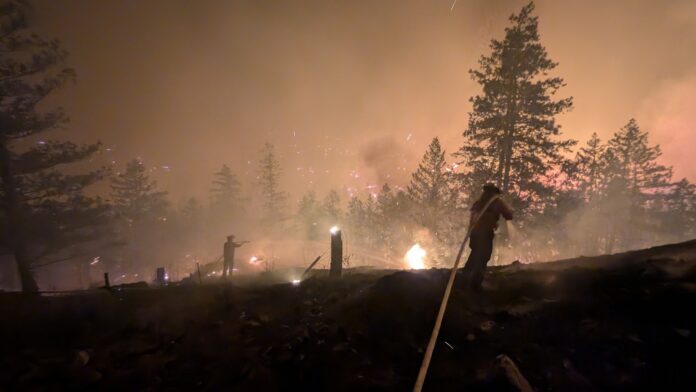

Summerland evacuee Shea MacDonald says uncertainty over what he and his neighbours will find when they return home has been one of the hardest parts of being forced out by the Bald Range wildfire.
MacDonald is among roughly 12,000 Summerland residents ordered to evacuate after the wildfire spread rapidly through the region.
The evacuation order for the entire District of Summerland took effect at 12:10 a.m. Saturday, according to the district. The BC Wildfire Service mapped the Bald Range wildfire at 15,590 hectares Monday morning.
The Regional District of Okanagan-Similkameen also expanded evacuation orders outside Summerland over the weekend. By Sunday evening, 451 properties in the regional district were under evacuation order and another 1,065 were under alert.
MacDonald said he has repeatedly thought about the period before the fire intensified and forced residents from the community. He said even the videos and photos he took at the time did not show how severe the situation would become.
“I’m looking at the photos I’m taking along the ride, the timeline, and it’s crazy to see how real it was without even realizing,” he said. “I have photos of the firetrucks coming out, and I think that’s when they were going to check it out for the first time.”
MacDonald said the longer he and other residents have been away from home, the more they have heard from neighbours about losses connected to the fire.
For evacuees hoping to check on properties, pets or livestock, RDOS senior manager of communications and engagement Erick Thompson said information on temporary access permits is expected shortly, but warned access will be limited while the wildfire is active.
“We are going to be putting out a document shortly that has information has that information about temporary access permits. Remember, though; the process is one thing, but the ability and availability is another thing because it’s still an active wildfire.”
“Not a lot of them will be available, because it’s an active area,” Thompson said.
“I know if you have pets or animals, that’s not what you want to hear. I haven’t had a chance to look into what ALERT is doing or where they are, I can’t speak on their behalf, but I know that’s one of the groups trained and available to get into areas where they can be a help with animals and live stock.”
MacDonald said hearing stories about losses became overwhelming and he has been trying to find small ways to manage the stress while waiting for more information.
“You start to hear names, you talk, and you share it around…it’s heartbreaking, and it was actually making me very anxious I found, I had to sit down for a few minutes because it was overwhelming just understanding what people are going through right now.”
MacDonald said he hopes some of the things that have helped him cope can also help other evacuees facing an uncertain return home.
“There isn’t always something you can do, but today I am going to get some exercise, yesterday I got a haircut. If you’re just sitting there paying attention to the news it can get a little bit stressful, just do things that are going to calm you down and recognize there’s not always something you can do.”