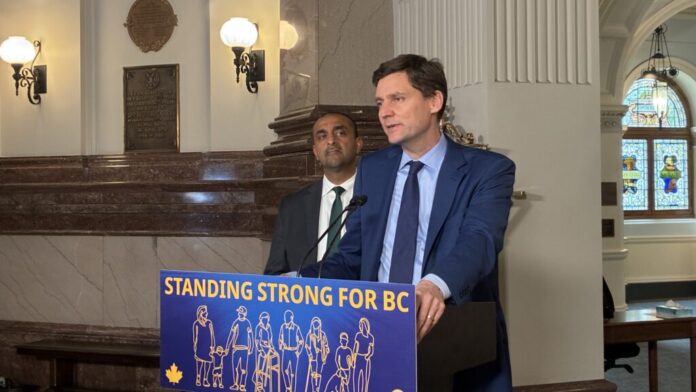

The British Columbia government is criticizing the latest round of U.S. tariffs on Canadian goods, saying the measures will hurt workers and businesses on both sides of the border while reinforcing the need to diversify the province’s trading relationships.
U.S. President Donald Trump announced 50 per cent tariffs on some Canadian products, including hockey sticks, wine and cement. The White House said the move was in response to what it described as the “discriminatory treatment” of American products, including restrictions on the sale of U.S. alcohol in most Canadian provinces and territories.
Premier David Eby said the latest action was “entirely predictable” and described it as another attempt to pressure Canada.
“This feels like an increasingly desperate and flailing approach to relationships with our country,” Eby said.
He said the tariffs would affect British Columbia’s economy, including workers in the forest products and beverage sectors, but argued they also underscore the importance of reducing the province’s dependence on the United States.
Eby pointed to efforts to expand trade with markets in Asia, including India and China, and said investments in trade infrastructure will help B.C. build stronger economic ties with other countries.
The premier also ruled out reversing B.C.’s decision to remove U.S. alcohol from government liquor store shelves.
“There is not a chance in hell that U.S. alcohol is going back on the shelf in British Columbia,” Eby said.
Health Minister Adrian Dix also condemned the tariffs, saying Canada must continue investing in its domestic economy while strengthening relationships with international partners.
“We’ve got to become more self-sufficient. We’re diversifying our markets,” Dix said.
He also criticized comments from U.S. officials linking Canadian wildfires to the trade dispute, calling the suggestion that Canada was responsible for the conflict “absurd.”
Forests Minister Ravi Parmar said the tariffs would increase costs for Americans while harming Canadian workers, particularly in British Columbia’s forest sector.
“This latest step to impose 50 per cent tariffs will absolutely have an impact on the forest sector in British Columbia,” Parmar said.
Parmar also rejected criticism of Canada’s wildfire management, saying climate change is affecting wildfire activity on both sides of the border and requires cooperation rather than blame.
Despite the latest tariffs, Parmar said the province remains encouraged that trade discussions between Canada and the United States are expected to continue in the coming days.
The tariffs are scheduled to take effect in 30 days.