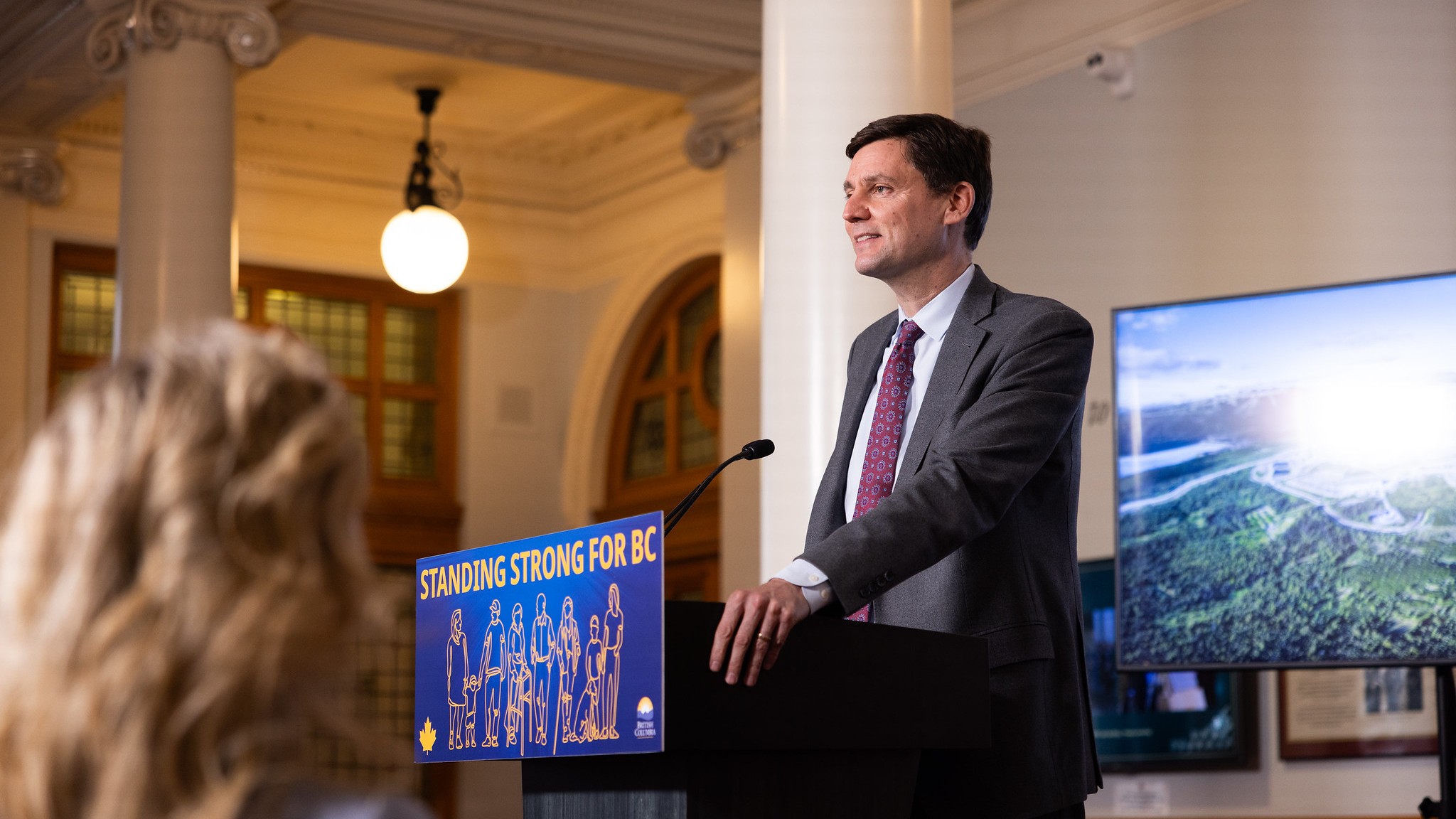

British Columbia is laying out a new 10-year plan to get major projects built and bolster the province’s skilled workforce, while playing a bigger role in national defence.
Premier David Eby said Monday the new “Look West” strategy sets big goals for the province.
“British Columbia can get big things done – which is why our province is vastly overrepresented in the list of major projects Ottawa is fast-tracking,” said Premier David Eby.
The strategy includes sector-specific action plans ranging from aerospace and construction to artificial intelligence and quantum computing. It aims to attract $200 billion in private sector investment over the next decade.
The province announced a plan last week to double funding for trades training over the next three years through a $241 million fund.
“This approach directly responds to feedback from industry and investors who say the availability of a skilled workforce is a critical factor when making investment decisions,” said the province in a statement.
In the short term, B.C. is prioritizing a previously-announced list of 18 major projects for fast-tracking, and hopes to enact legislation to accelerate the North Coast Transmission Line.
The 10-year plan also outlines plans to partner with the federal government on defence priorities. By 2035, the province aims to secure 35 per cent of federal defence vessel contracts, with Vancouver-based shipyard Seaspan as a strategic partner.
“What’s a key part of the ‘Look West’ strategy is to capture that opportunity of the federal government wanting to increase their NATO spending, billions of dollars being invested,” said Jobs Minister Ravi Kahlon. “We want to make sure that British Columbia sees as many dollars of those dollars as possible because it means good jobs in our communities.”
The plan also points to continued efforts diversify trade away from the U.S. by expanding to new markets in Asia and Europe, and removing inter-provincial trade trade barriers.
To support the forestry sector, the provincial strategy aims to triple the amount of B.C. wood used in construction by 2035.
B.C. is also looking to grow its profile as a hub for quantum computing and AI. It sets a goal of doubling employment in the tech sector to 400,000 over the next decade. A proposed advisory committee would also explore ways to integrate AI skills into K-12 school systems.