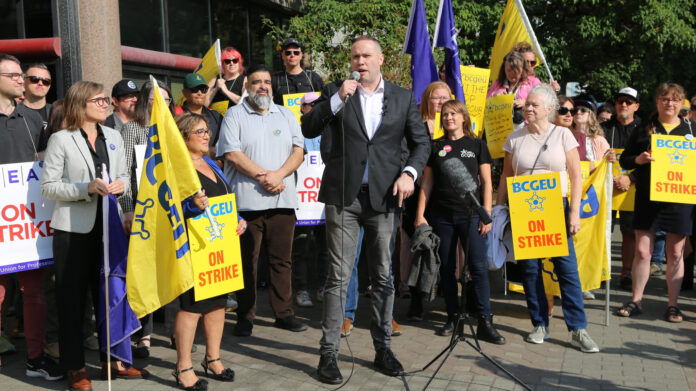

One of British Columbia’s largest public-sector unions is calling on the province to allow more remote work as fuel prices remain high.
“The increasing price of gas places an undue burden on workers across the province,” said Paul Finch, president of the B.C. General Employees’ Union, in a statement.
“The provincial government has an opportunity to help alleviate that burden by allowing workers the flexibility to work from home. In addition to lessening the pain workers are feeling at the pump, this move would help reduce emissions and congestion,” said Finch.
The call follows a similar appeal by federal unions, which point to recommendations from the International Energy Agency (IEA) to reduce demand for oil and gas.
The IEA said the current conflict in the Middle East has triggered massive disruptions of oil shipments through the Strait of Hormuz, pushing crude oil prices above $100 US per barrel.
It recommends immediate public-sector measures that governments can take to reduce global demand for oil, including working from home where possible.
B.C.’s Finance Minister Brenda Bailey said about 70 per cent of government workers currently have a telework agreement negotiated with their managers.
“The province has been very open to people working from home,” Bailey told reporters Monday. “We see many benefits from it, but it’s really a relationship between a manager and employee.”
She said the province is not currently considering other measures to help ease pressures due to the high cost of fuel, saying it’s “very early days.”
B.C. Conservative labour critic Kiel Giddens said allowing more people to work from home makes sense for rural and remote communities, but raised concerns about the impact on downtowns if there are fewer commuters.
“Ultimately, what we’re seeing is an affordability crisis,” said Giddens.