
A fungus that causes a deadly disease in bats has been detected for a second time in British Columbia.
The B.C. government said the fungus that causes white-nose syndrome in bats was detected in droppings, or guano, collected in the Metro Vancouver area.
White-nose syndrome can lead to starvation and death in bats and has caused declines in bat species across North America.
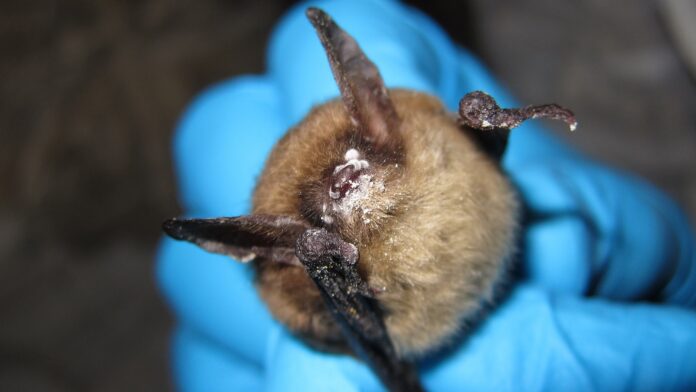
Bats affected by the syndrome may develop a white fuzzy growth on their face and wings.
The fungus was first identified in B.C. in guano found in the Grand Forks area in 2022. It has only been found in guano so far in the province, and no bats are confirmed to have the disease.
Since it was found in New York state in 2006, white-nose syndrome has impacted bat populations across 40 U.S. states and nine Canadian provinces.
Paula Rodriguez de la Vega, provincial coordinator for Community Bat Programs of B.C., said the detection of the fungus in guano samples means it’s likely only a matter of time before the disease is confirmed in B.C.
“We don’t know what percentage of the population has the fungus, and are they actually sick with white-nose syndrome or are they just having a little bit of the fungus that they’re fighting,” she said. “So it’s really important for us to confirm it by finding a dead bat that actually has white-nose syndrome.”
Rodriguez de la Vega said researchers often monitor for the fungus by collecting guano in the spring, when bats are coming out of hibernation and heading to where they will spend the summer.
“They clean themselves off, and in the process of licking themselves they swallow the spores and then poop them out,” explains Rodriguez de la Vega.
She said the fungus can lead to a mortality rate of 90 to 99 per cent when it infiltrates a bat colony.
Some bat species have been hit harder than others. The little brown myotis and the northern myotis are considered endangered, partly because of the impacts of white-nose syndrome.
Rodriguez de la Vega said people can notify the bat program if they find any dead bats on their property or in the wild so they can be picked up for testing.
Because bats can carry rabies, experts caution people never to touch them with bare hands and to always seek medical attention right away if there is possible contact with a bat.
Rodriguez de la Vega said humans can’t contract white-nose syndrome from bats, but they can play a role in spreading the fungus.
She recommends that people who explore caves avoid bat roosts and decontaminate their clothing afterward to avoid spreading fungus spores to other sites.
She said campers who own RVs with an awning should also check that there are no bats on it before rolling it up and moving to another site, to avoid potentially transporting an infected animal.
“It is perfectly safe to co-exist with bats on your building, as long as you’re following best management practices and safety protocols,” said Rodriguez de la Vega.
She said one of the reasons why white-nose syndrome is so concerning is that bats play a crucial role in the ecosystem.
“Bats are very important because they eat a large number of insects, including pests that affect crops and forests,” she said. “And they also eat mosquitos, of course.”
A 2024 U.S.-based study published in the journal Science looks at the agricultural and human costs associated with the decline of bats due to white-nose syndrome. It found county-level insecticide use increased by more than 30 per cent, while farms’ crop revenue decreased after the emergence of white-nose syndrome.
The study also found infant mortality rates from internal causes rose nearly eight per cent in affected counties, which the authors said highlights the impacts of increased pesticide use on human health.

Rodriguez de la Vega said female bats typically only give birth to one pup per year.
“They’re not rodents, they don’t reproduce like crazy, so it’s really important to protect maternity colonies,” she said.
She said communities can help encourage bat populations by ensuring there are large trees for them to roost in and reducing pesticide use so they have a diversity of insects to eat.
She also said that because bats drink water during flight, they need large, open ponds or wetlands. She said bats can sometimes get stuck in backyard pools while trying to drink water, and homeowners can install a wildlife ramp to help them crawl out.
The community bat program also invites volunteers to help with monitoring efforts, including an annual bat count in the summer.
The program said there were more than 1,000 counts completed at hundreds of roost sites throughout B.C. last year, and there were no consistent declines found in bat populations.