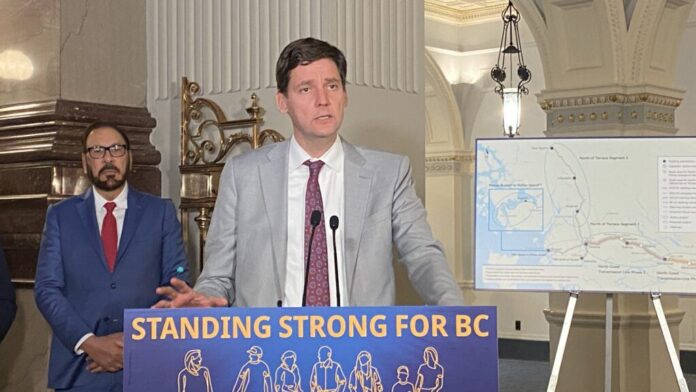

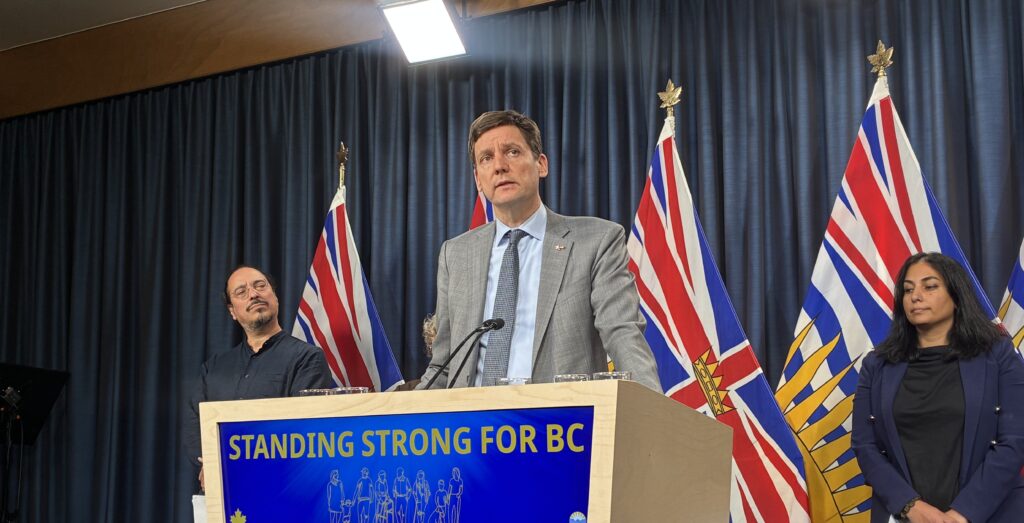
British Columbia’s NDP government introduced a slew of legislative reforms in 2025 giving Cabinet broader powers to fast-track major projects and centralize decision-making. But Premier David Eby is rejecting the suggestion that the moves amount to weakening independent oversight or sidelining the legislature.
In a year-end interview with Vista News, Eby said the legislation has been about reducing red tape and delivering projects faster.
“I acknowledge we are spending some political currency on that. We’re going to be held accountable for that by voters,” he said. “But I would rather be in a position of saying we got these things built than to say we went through an extensive amount of processes and we’re just about to get started construction when I go back to the voters.”
Eby faced intense backlash early in the year for a portion of his tariff response bill that would have given government the ability to bypass the legislature. The NDP walked back that section before the bill passed.
A pair of bills introduced in the spring further expanded cabinet’s decision-making power over major projects.
Bill 14, the Renewable Energy Projects (Streamlined Permitting) Act, accelerates approvals for certain renewable energy projects. That includes consolidating oversight under the British Columbia Energy Regulator, a Crown corporation.
Bill 15, the Infrastructure Projects Act also gives the government broader powers to accelerate permitting and approvals for major projects.
Eby has maintained that the legislation, as well as the fall’s Bill 31 aimed at fast-tracking the North Coast Transmission line, is necessary to counter the impact of U.S. tariffs and to position B.C. as Canada’s “economic engine.”
Stewart Prest, a political science lecturer at the University of British Columbia, said the moves are part of a trend across Canada of political leaders wanting to make a show of shoring up their economies against the economic uncertainty created by the Trump administration.
“By making use of the bills from the spring session and by trying to further consolidate power in cabinet, the NDP is trying to equip itself with tools to both actually do things and to be seen to be taking assertive action,” said Prest.
“But of course, when you centralize power and decision making and streamline it, it does introduce the possibility of mistakes being made and not caught,” he said.
Eby went as far as to stake his government on certain bills passed this fall, including the North Coast Transmission Line legislation. The B.C. Conservatives opposed the bill and even sought to delay it by six months through a hoist motion, which failed.
Bill 31 gives Cabinet more decision-making power over what industries and businesses can connect to B.C.’s power grid.
Donegal Wilson, Conservative MLA for Boundary- Similkameen and critic for water, land, and resource stewardship, said in the legislature in October the legislation was part of a continued pattern by the NDP government to centralize power.
The B.C. Greens also voted against the bill, but it narrowly passed last month thanks to the NDP’s one-seat majority.
Ahead of the vote, Eby painted opposition to the bill as a direct threat to B.C.’s economic future and said his party is prepared for an election “if necessary.”
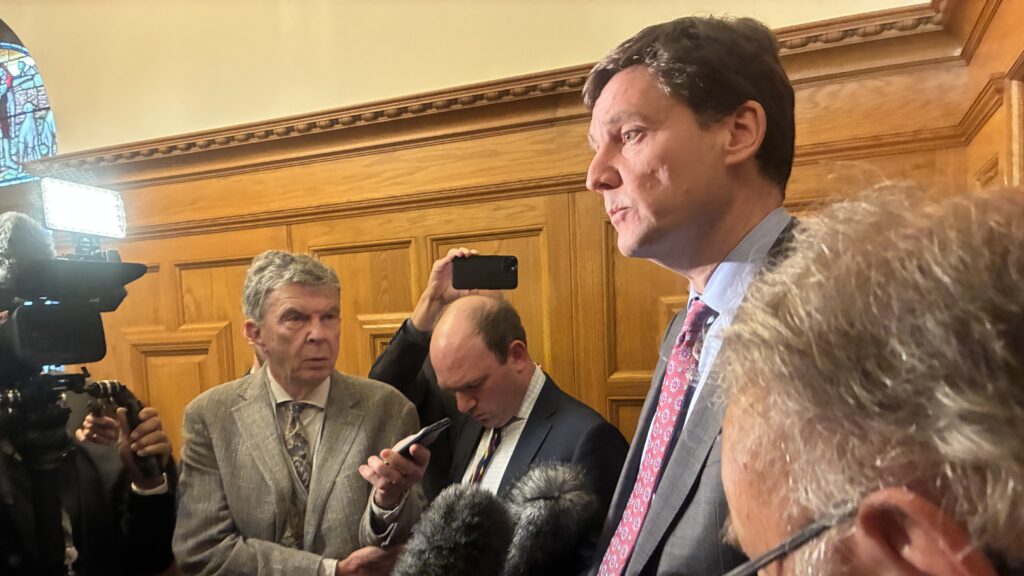
The NDP deemed another bill that makes changes to the Mental Health Act a confidence vote earlier this month. The amendments are intended to update language in the act to ensure health professionals won’t fear being sued for providing treatment to involuntary care patients.
Prest said the confidence votes help further the narrative of the NDP as a proactive government.
“I think that’s why Mr. Eby used such inflammatory rhetoric and rhetoric that went against the edge of what the political realities were,” said Prest. “Because the NDP has a working majority, particularly when they are working with the Green Party and even without, they have this razor thin majority. And so it is unlikely that an election would emerge unless the NDP somehow engineers it.”
Questions have swirled for months about whether Eby would call a snap election, given recent internal tensions that left the Opposition Conservatives in disarray and culminated in the ouster of leader John Rustad earlier this month.
Asked under what circumstances he would call an election, Eby said there are some “bright lines.” He said the province needs to be able to pass bills that grow the economy and address issues like mental health and drug addiction.
“We have enough votes, I hope, to be able to ensure that government is stable and we’re able to pass all these. But if anything were to happen, a member was away for some reason or unable to dial in or whatever the challenge was and the government lost a vote, then we would be into an election, and we will be ready if necessary,” said Eby. “We just don’t want to. It’s not a priority for British Columbians, and we would prefer not to.”
The post Year in review: Eby says fast-track powers are worth the political risk appeared first on AM 1150.
The post Year in review: Eby says fast-track powers are worth the political risk appeared first on My South Okanagan Now.