
An annual report backed by hundreds of British Columbia organizations says the province is backsliding on its climate commitments.
The report, released Monday by the B.C. Climate Emergency Campaign (BCCEC), said the B.C. government has made minor progress on accelerating the transition to zero-emission transportation and buildings. But it says the province has failed in eight out of 10 areas the group says are urgently needed actions.
The group said it’s the province’s worst performance since the reports began in 2022.
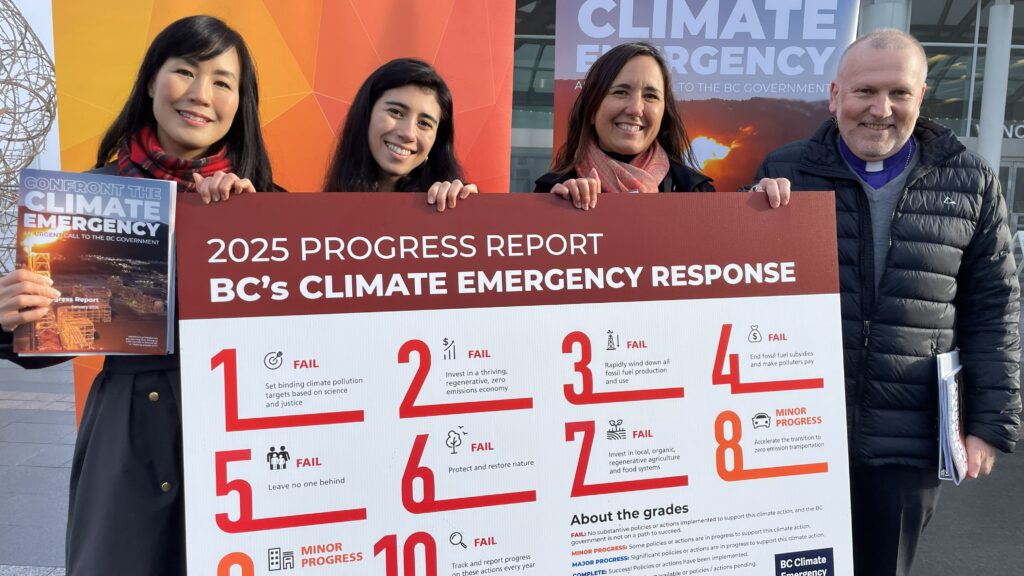
“British Columbians are already experiencing immense financial, social, and health burdens due to climate change, and climate pollution is set to increase by more than 30 per cent, exclusively because of the Province’s support for the risky, boom-or-bust LNG industry,” said Tracey Saxby, a marine scientist and lead author of the report.
The report is critical of the B.C. government’s investment in liquefied natural gas export facilities, such as Ksi Lisims LNG, Woodfibre LNG, and Cedar LNG.
It said if all approved LNG projects go ahead, greenhouse gas emissions in B.C. will increase by around 20 million metric tonnes, equivalent to one-third of the emissions of the entire province.
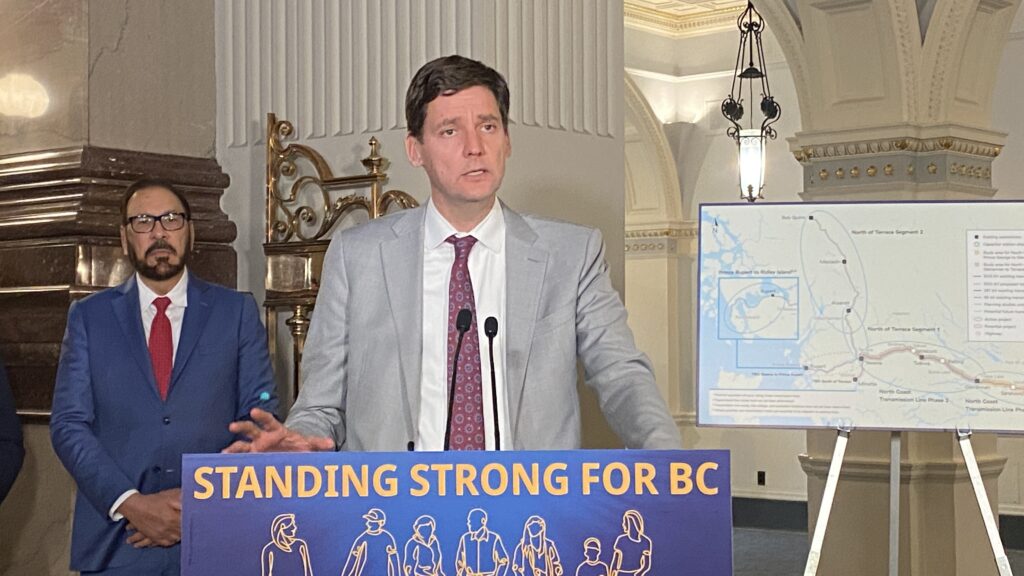
The report also slams B.C.’s planned North Coast Transmission Line, which is intended to power future major projects in northern B.C., including mining and LNG expansion.
“This risks diverting B.C.’s limited clean electricity away from other sectors to greenwash fossil fuel extraction, funded by B.C. taxpayers and ratepayers,” the report said.
It said the province has reduced environmental protections and oversight by moving to fast-track industrial development, passing Bills 14, 15, and 31 last year.
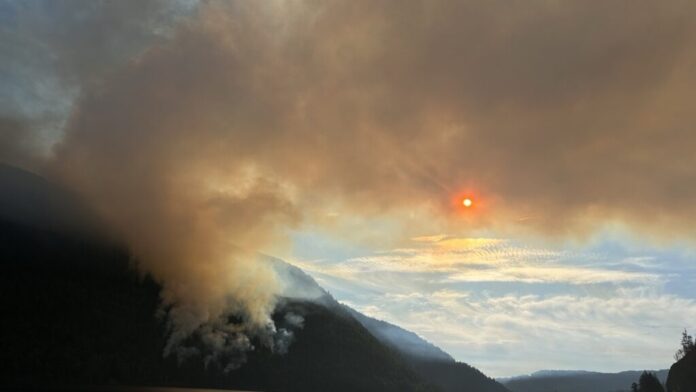
The BCCEC also raised concerns about the health burden of climate change, citing the impacts of wildfire smoke and natural gas fracking.
“I know that our health care system, which is already being pushed to the limit, cannot afford this,” said Dr. Melissa Lem, former president of the Canadian Association of Physicians for the Environment. She said research shows that fracking is linked to a host of health problems, from childhood cancer to heart disease.
The report calls on B.C. to fund climate solutions by increasing taxes on corporations, big polluters, and the “super rich,” raising royalty rates for fossil fuels and water, and redirecting fossil fuel subsidies to cleaner energy.
The B.C. government acknowledged in its latest Climate Change Accountability Report that it is not on track to meet its 2030 goal of reducing greenhouse gas emissions to 40 per cent below 2007 levels.
In November, an independent review of the province’s CleanBC plan said the province aimed too high when it initially set its emissions targets, and there is a need to “recalibrate” those targets going forward. The report’s recommendations largely focus on shifting the province further toward electrification.
The authors also raised concerns about B.C.’s LNG expansion, saying it threatens to wipe out climate progress made in other sectors.
Energy and Climate Solutions Minister Adrian Dix has defended B.C.’s LNG projects as an investment in “clean energy.” He said B.C.’s LNG projects would produce far fewer emissions compared to other producers in the U.S. and globally.
B.C. Green MLA Jeremy Valeriote said in a statement Monday that implementing the recommendations of the CleanBC review should be the “bare minimum.”
“Communities across BC are already living with the impacts of climate inaction. Droughts, floods, and wildfires are no longer abstract warnings—they are recurring realities that disrupt lives, threaten health, and strain local economies,” he said.
The post Civil society groups give B.C. failing grade on 8 out of 10 “urgent” climate actions appeared first on AM 1150.