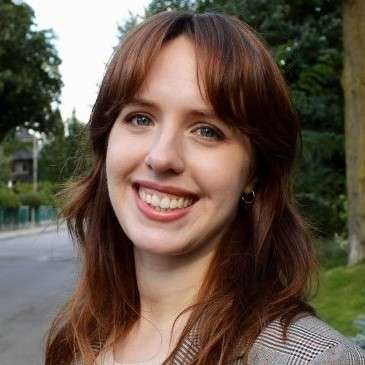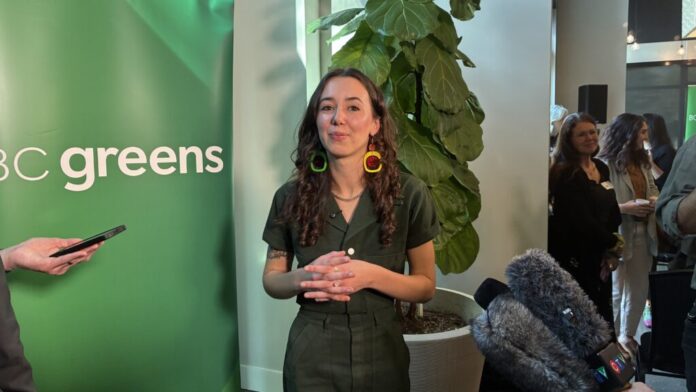

B.C. Green Party leader Emily Lowan says she observed many of the same themes affecting communities across the province during her month-long “Fight the Oligarchs Tour.”
“The main takeaway for me is all across B.C., we’re seeing the province download the costs, while the one per cent and these multinationals extract more and more wealth from, local communities,” said Lowan in a year-end interview with Vista News.
The 25-year-old climate advocate and Victoria native won the party’s leadership race in September. Her campaign focused heavily on youth recruitment through active social media campaigning and progressive policies. Her platform included calls to tax the richest one per cent of British Columbians, ban fossil fuel expansion, and put price caps on staple grocery products.
While she doesn’t yet have a seat in the legislature, Lowan said that has allowed her to focus on building relationships at the grassroots level.
“It’s been, I think, a really great use of my time to be out there in the field and, generating so much energy for the party,” she said.
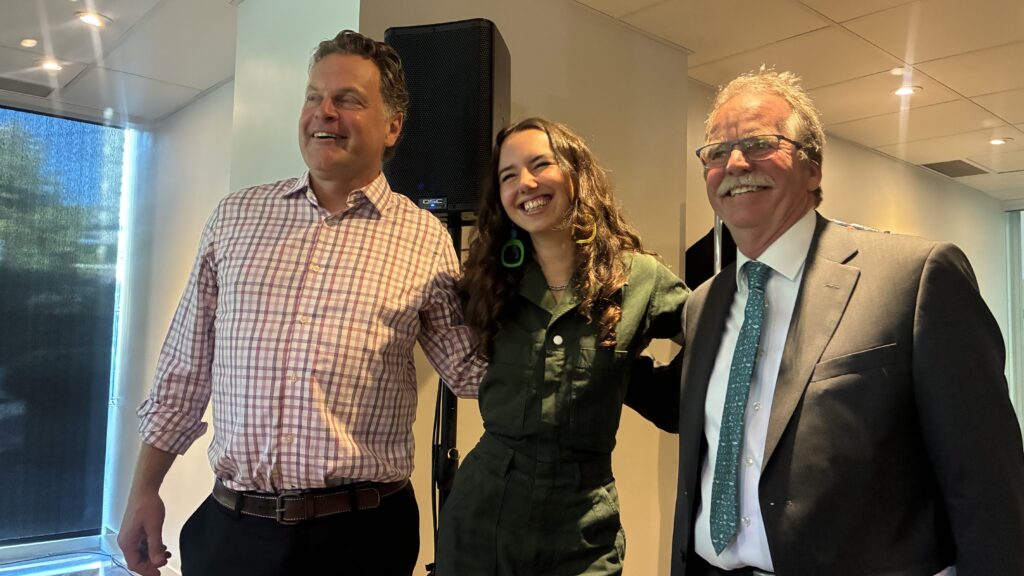
West Vancouver-Sea to Sky MLA Jeremy Valeriote and Rob Botterell, MLA for Saanich North and the Islands, hold the party’s two seats in the legislature.
Lowan has said she’s looking into running for a seat in the Greater Victoria area at the next available opportunity.
The B.C. Greens are currently renegotiating their co-operation agreement with the NDP government. The Cooperation and Responsible Government Accord, known as CARGA, has seen the NDP and the Greens work together on shared priorities, ranging from mental health care to electoral reform. The Greens also agree to support the NDP in certain votes, bolstering the NDP’s one-seat majority.
Lowan said this first year of CARGA has been “pretty imperfect.”
“I think about 60 per cent of the CARGA commitments from Year One were completed,” she said. “Mind you, it should have been 100 per cent by this point, but budgetary constraints were used as an excuse. So that in and of itself is problematic.”
CARGA 2025 included an agreement to assemble an all-party committee that would consider methods of proportional representation.
Under such a system, a parties’ share of seats is equal to their share of the vote. If a party gets 30 per cent of the vote, they would get 30 per cent of the seats in the legislature.
A report from the committee released in November doesn’t rule out another referendum on proportional representation. It recommended the province take further steps to consult residents and local governments to gage support for any electoral changes.
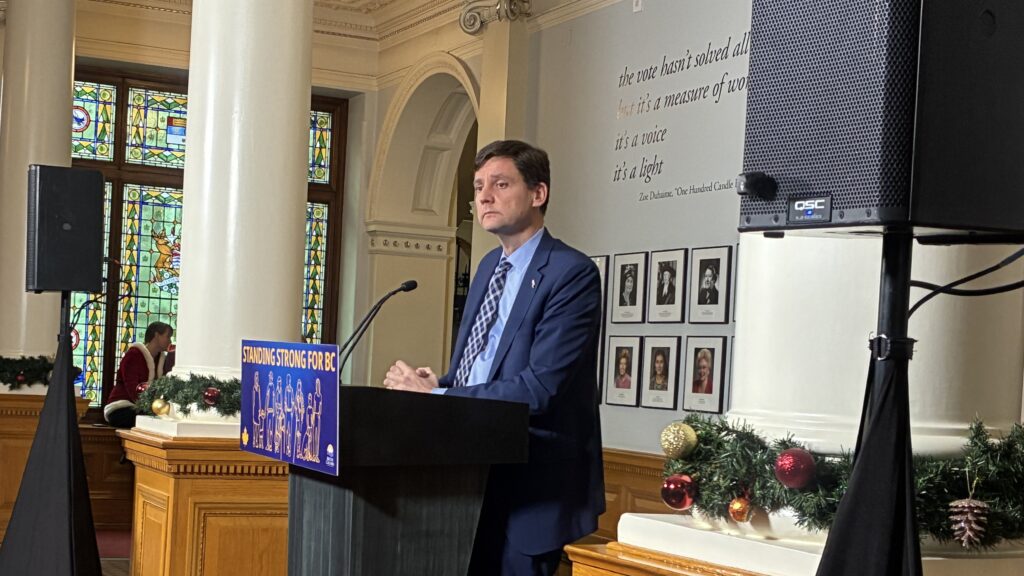
Premier David Eby has dismissed doing away with B.C.’s first-past-the-post electoral system since British Columbians opted to stick with the status quo in a 2018 referendum.
Lowan alleged that the NDP intentionally tried to confuse the issue by asking convoluted questions that tasked voters with ranking their preferences for three different electoral systems.
“I think the B.C. Greens are on track to double or triple our seat count [in the next election], to firmly hold the balance of power and force the government’s hand on proportional representation,” said Lowan.
Asked if the Greens are ready to walk away from CARGA if unsatisfied in the negotiations, Lowan suggested that is a possibility.
“The Greens, we have red lines with this agreement. And I think it’s of the utmost importance to hold our ground and to negotiate in good faith, see where we can get, but be prepared for any outcome,” she said.
Lowan didn’t specify what those red lines are while CARGA negotiations are ongoing.
Speaking to Vista News earlier this month, Eby said his NDP and the Greens remain broadly aligned on many issues, but he also seemed to leave the door open to ending the deal.
“I committed to British Columbians we would try to work across party lines wherever we could. And if we’re not able to do that, then we’re not,” he said.
One point of contention in the new year is likely to be Eby’s promise to table amendments to B.C.’s Indigenous rights legislation. Eby has said recent court decisions related to Indigenous rights and title were “overreaching,” and amendments are needed to reflect what he says was the original intent of the legislation.
Lowan said emphatically the Greens don’t support amending the Declaration on the Rights of Indigenous Peoples.
“I think Eby’s plan to amend DRIPA is a dangerous, slippery slope,” she said. “I think he’s spinelessly ceding ground to anti-Indigenous players and is opening the door to dilute DRIPA.”
University of British Columbia political lecturer Stewart Prest said Lowan has been successful in tapping into a younger demographic in a way other B.C. parties have not.
“[There’s] that sense of a younger generation that is deeply frustrated with the lack of action on the environment, but also lack of action on issues of equality more broadly,” said Prest.
But he said there is a risk of creating divides between more traditional Green voters and the party’s growing youth movement.
Prest also said, in the case an election is called, some voters frustrated by the NDP’s climate policies, like LNG expansion, may turn to the reinvigorated Greens as an alternative.
“And you don’t need to lose too many of those voters to see the NDP’s coalition decline just enough to allow the Conservatives to surge ahead because we are so polarized and…balanced on a knife edge between the two parties electorally,” said Prest.
The post Year in review: B.C. Greens leader Emily Lowan looks to the grassroots appeared first on AM 1150.