
British Columbia Premier David Eby says Alberta’s push for a new pipeline is distracting the federal government from “real” projects that can be delivered in the near term.
Alberta and the federal government revealed the details Thursday of a much anticipated agreement, which includes a commitment to develop “one or more” new pipelines to increase oil exports to Asian markets — but B.C. was largely left out of talks.
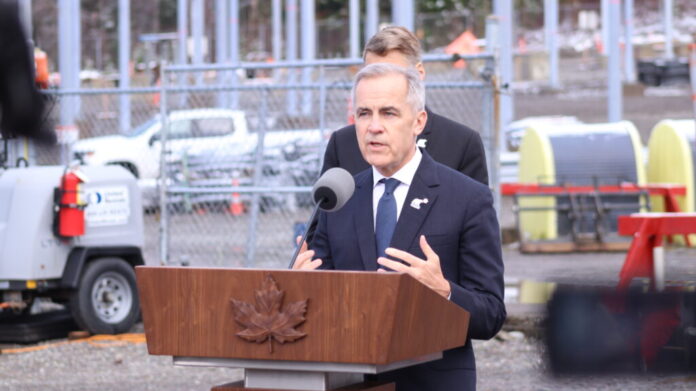
Prime Minister Mark Carney and Alberta Premier Danielle Smith formally announced the memorandum of understanding (MOU) at an event in Calgary.
Alberta is to submit an application to the federal Major Projects Office (MPO) to fast-track a pipeline by next July.
Smith said in October her government would put down $14 million to support the application, with an advisory group that includes energy companies South Bow, Enbridge and Trans Mountain.
The MOU says the pipeline would be privately financed and constructed.
It also confirms the federal government would make changes to the oil tanker ban on B.C.’s north coast if a pipeline is ultimately approved – a move Eby and Coastal First Nations have repeatedly said is a non-starter.
Other concessions to Alberta include promises to scrap the planned cap on oil and gas emissions, and to suspend the Clean Electricity Regulations in the province pending a new carbon pricing agreement.
The MOU says the new pipeline would be in addition to expanding the capacity of the existing Trans Mountain pipeline by up to an additional 400,000 barrels per day.
News broke last week that an agreement between Alberta and Ottawa was in the works, and appeared to catch B.C. leaders off guard. Premier David Eby said talks involving B.C. should have B.C. at the table.
Eby said he spoke to Prime Minister Mark Carney on the phone on Monday morning, where he voiced his concerns and said any new projects must have the support and consent of First Nations.
Eby has been staunchly opposed to a new pipeline project, arguing there’s no private proponent and he’s doubtful any would come forward to finance the massive project.
“There is not a world in which, with the current price of oil, a private company is going to step up and pay for this pipeline to the north,” Eby told reporters on Monday.
He has also maintained that repealing the oil tanker ban on B.C.’s north coast would threaten the region’s economy and jeopardize First Nations support for other valuable major projects in B.C.
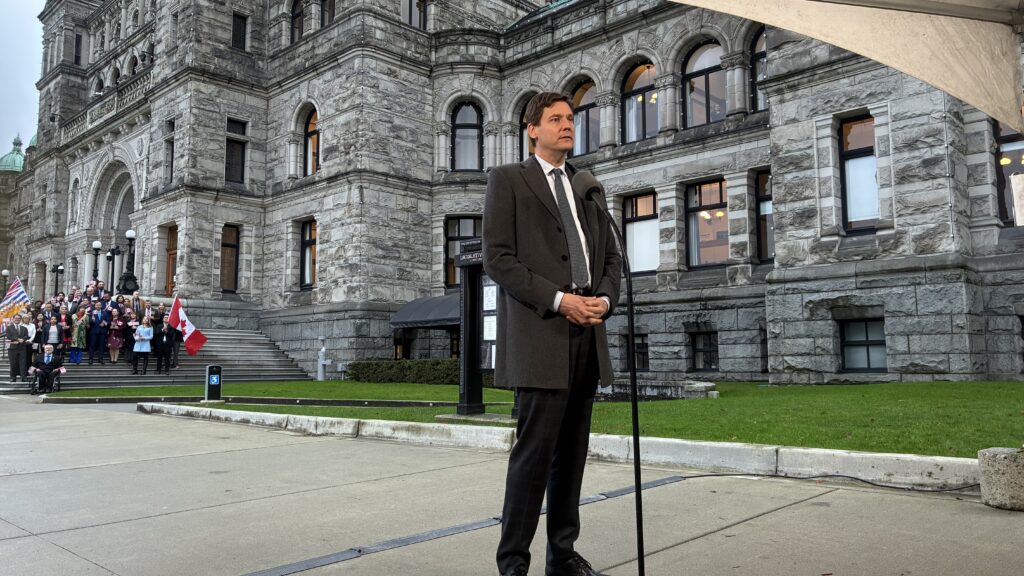
Eby responded to the MOU Thursday afternoon in front of the legislature, with MLAs gathered on the steps behind him holding B.C. and Canadian flags.
He said Carney briefed him on the outline of the agreement on Wednesday, a day before the formal announcement.
Eby maintained that the pipeline proposal is distracting the federal government’s attention and resources from other more viable major projects, pointing to LNG Canada Phase 2 and a number of mining projects in B.C.’s northwest.
“We need to make sure that this project doesn’t become an energy vampire, with all of the variables that have yet to be fulfilled – no proponent, no route, no money, no First Nations support,” said Eby.
He claimed the focus on the pipeline project has already led B.C. to miss out on a lucrative chance to have potash and fertilizer producer Nutrien ship product out of the Port of Vancouver.
The Saskatchewan company announced last week it would build its new terminal in Washington state. Eby said he believes the Nutrien could have been persuaded to build it in B.C. if Saskatchewan Premier Scott Moe hadn’t been busy endorsing Alberta’s pipeline proposal.
Eby said the MOU’s stipulation that a pipeline must have a private proponent is “probably fatal” for the proposal. “I don’t think one taxpayer dollar should go into this project,” he said.
The MOU says the federal government and Alberta will engage in discussions with B.C. on the potential pipeline and ensure B.C. share in the economic benefits of the project.
The deal also reiterates Ottawa will work with B.C. on other major projects of national interest. Four B.C. projects are already on the federal government’s list for potential fast-tracking, including LNG Canada Phase 2, Ksi Lisims LNG, the Red Chris Mine Expansion, and the North Coast Transmission Line.
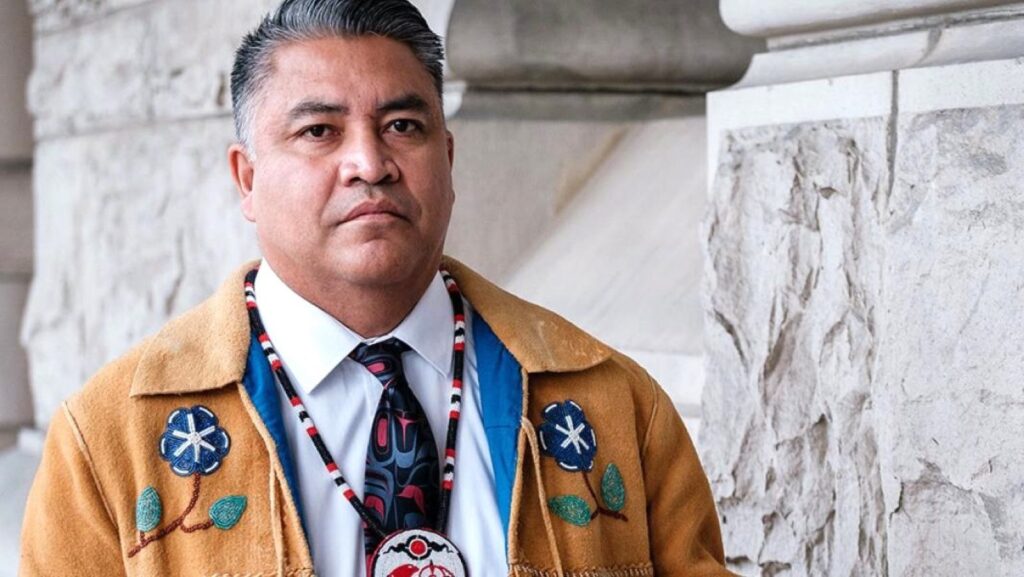
The MOU says Alberta and the federal government agree to “engage meaningfully” with Indigenous Peoples in both Alberta and British Columbia on the project. Alberta would also facilitate possible Indigenous co-ownership of the pipeline and the Pathways project.
Coastal First Nations have said they’ll do everything they can to keep oil tankers out of northern waters.
A voluntary tanker exclusion zone had been in place in the since 1985, due to the precarious waters in region. The federal government formalized the moratorium in 2019, prohibiting oil tankers carrying more than 12,500 metric tonnes of oil. Smith has said the tanker ban is one of several barriers to private investment in a new pipeline.
“As the Rights and Title Holders of the Central and North Coast and Haida Gwaii, we are here to remind the Alberta government, the federal government, and any potential private proponent that we will never allow oil tankers on our coast, and that this pipeline project will never happen,” Chief of the Heiltsuk Nation Chief Marilyn Slett said in a statement Wednesday.
Slett said Coastal First Nations have been met with a “wall of silence” from the federal government throughout the discussions.
The Haisla Nation also released a joint statement with the District of Kitimat Wednesday, after a meeting with Smith. They said the Haisla Nation made it clear to Smith they oppose an oil pipeline and export facility in their territory.
Carney said in the House of Commons earlier this week that B.C. and First Nations title holders would “have to agree” for a pipeline project to go forward. He told reporters on Thursday First Nations partnership will be a requirement for any pipeline project.
The British Columbia Assembly of First Nations (BCAFN) said going ahead with a pipeline without First Nations consent would violate the province’s Declaration on the Rights of Indigenous Peoples Act.
“Economic incentives, co-ownership, and piecemeal consultation processes do not replace genuine consent, nor do they absolve governments from their legal and ethical commitments,” said the BCAFN in a statement on Thursday.
BCAFN Regional Chief Terry Teegee tells Vista News the majority of First Nations members he’s spoken to do not support a new pipeline, and there could be legal challenges if the project goes forward.
Teegee said the risks are too high. “It’s a matter of when and where will this pipeline breach,” he said.
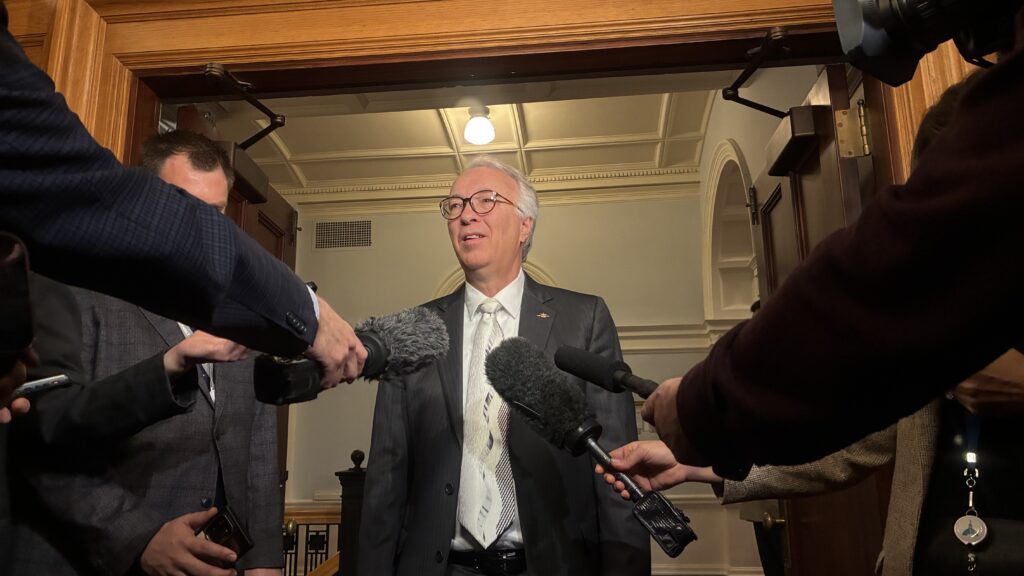
B.C. Conservative Leader John Rustad welcomed the agreement and said Eby’s opposition to the pipeline amounts to him being on “Team Trump” rather than “Team Canada.”
“I want to thank Prime Minister Carney for stepping up to the plate and recognizing we need to move Canadian oil to international markets,” said Rustad.
B.C. Green Party Leader Emily Lowan slammed the pipeline talks, calling them “a betrayal of British Columbians.” She pointed to the Trans Mountain Pipeline Expansion Project (TMX), which the federal government ultimately purchased from Kinder Morgan in 2018 and is still seeking a private buyer for.
“The TMX disaster left billions of debt on the bills of working people, meanwhile oil prices are crashing and won’t recover. Pushing another crude oil pipeline is reckless, out of touch, and completely indefensible,” said Lowan.
Jeremy Valeriote, Green MLA for West Vancouver-Sea to Sky, said the MOU is a “hail mary” by Alberta and federal government to solicit a private proponent for the pipeline.
The MOU also pledges to develop large transmission interties between Alberta and British Columbia and Saskatchewan to help power major projects like LNG, critical minerals and data centres. It includes commitments toward the construction of the Pathways Alliance carbon capture and storage project and more AI data centres in Alberta.
-With files from Brendan Pawliw
The post Alberta, Ottawa strike deal on new oil pipelines; B.C. largely left out appeared first on AM 1150.